The Road to 60
For most of the 20th century and the first decade of the 21st, higher education institutions and in turn, policy makers, pointed to enrollment as the key metric of success for colleges and universities.
Expanding efforts to provide access to higher education made post-secondary education more available to students of color, first generation students, and those from low-income households. However, as enrollment numbers increased, particularly among these traditionally underrepresented groups, graduation rates remained the same.
This gap underscored widespread failure by higher education institutions to support students’ post-secondary academic journeys, leaving many individuals without a degree, without the knowledge and training to pursue quality work, and ultimately, in debt. Over time, it became clear that new measurements of success were needed–measurements that centered on factors that were directly related to long-term student success, economic mobility, and the future workforce demands of the nation.
Impact
Adults with post-secondary education
The proportion of adults with recognized, formal quality education or training after high school went from 37.9 percent in 2008 to 53.8 percent by 2021. Many of these adults are Black and brown adults who have long experienced inadequate access to education.
The increase of 16% over a decade and a half isn't just a data point. It represents millions of individuals who are building brighter futures through attaining the knowledge and skills that support their hopes, dreams, and aspirations.
During a fractured, disruptive time in our nation's history the goal of 60% united individuals, organizations, and communities who came together to help make those hopes a reality.

Big goals take focus and dedication to reach
Progress toward the attainment goal was built through the repetition and iteration of these central ideas. In essence, these themes paved the way to the Road to 60
Regardless of whether the nation meets the 60 percent goal by 2025, the buy-in to A Stronger Nation and the policies and investments the goal inspired contributed to an increase in the proportion of adults in the United States with education and training after high school. The goal shifted people’s thinking at a time when higher education emphasized broadening college access and meeting enrollment targets. There was often little attention to whether people were completing their academic programs, or whether their credentials prepared them to get good jobs.
Lumina played a significant role in focusing the nation’s attention on how colleges and universities can better serve the more than 42 million U.S. adults who earned college credits but discontinued pursuing degrees.Today’s Student: System change requires meeting the needs of today’s students, who are more likely to be Black and brown, family caregivers, and full-time workers. Often, these students are older, struggle to pay bills, buy food, and find stable housing. An essential element of moving the nation toward the 60 percent goal is building an understanding of today’s students among leaders. Other foundations and nonprofit organizations have widely adopted this focus on today’s students to highlight how education and training systems must shift to serve them better.
Lumina’s focus on advancing racial justice and equity has focused states on the necessity of eliminating morally shocking disparities in the proportions of working-age Black, Hispanic, Latino, and Native American students with college degrees or other credentials of value.
Lumina works closely with state governments to develop policies and programs that support higher education access and completion. Initiatives like Talent, Innovation, and Equity (TIE) grants fund state-level efforts to address equity gaps in attainment.
The Lumina Foundation has strategically partnered with colleges, universities, and other institutions to advance its goal of increasing postsecondary attainment. Through these partnerships, it aligns resources and fosters collaboration across sectors, including workforce development and policy advocacy. This approach enables Lumina to implement data-driven solutions that promote educational equity and drive systemic change at both local and national levels.
Defining quality credentials has been central to Lumina’s work toward the 60 percent goal. Lumina defines quality credentials as degrees, certificates, industry certifications, or other credentials that demonstrate transparent learning outcomes and lead to meaningful employment and further education.
The foundation invests heavily in research on postsecondary attainment, equity, and workforce alignment. Lumina’s Stronger Nation report provides annual updates on progress toward its 60% goal, breaking down data by state, race, and ethnicity.
The foundation supports journalism and journalism training that increase awareness and understanding of issues affecting today’s students and the urgent need for change in higher education.

The Approach
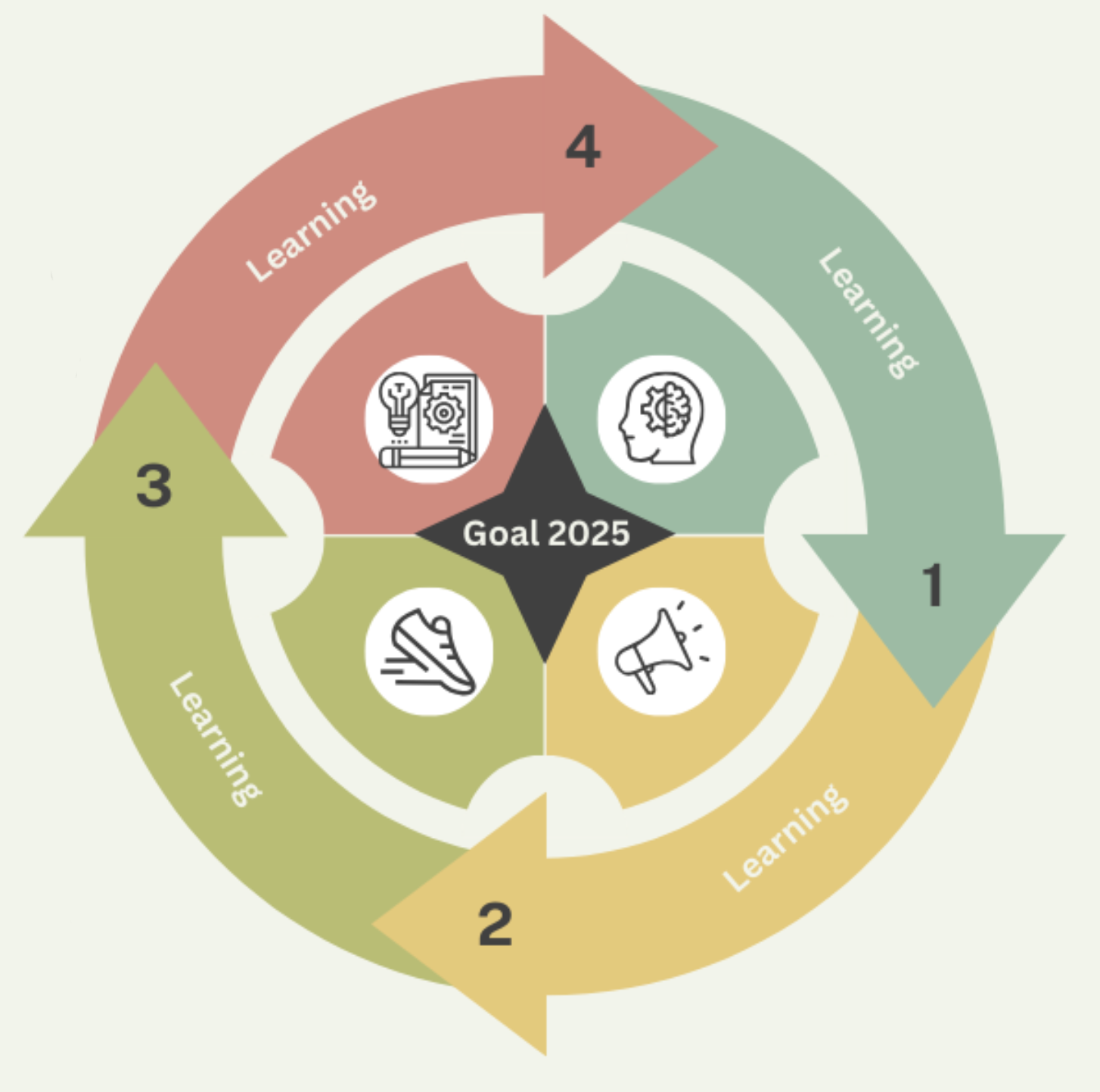
Research & Develop Solutions
Establish data and evidence base for Goal 2025; identify / develop promising models, solutions, tools, and frameworks to drive next steps: i.e. increasing awareness, alignment and implementation.
Build Awareness & Alignment
Build public awareness of and alignment to Goal 2025; establish key partners and networks; and support partners to align their goals and strategies with Goal 2025.
Equip & Implement
Equip partners with necessary capacity and readiness; and support the implementation of evidence-informed solutions aimed at advancing equitable outcomes and experiences for learners.
Refine & Release
Learn from efforts and refine strategies accordingly in order to increase impact. Lumina may continue as-is, adjust, or "release" initiatives by passing the baton to an existing organization, creating a new organization, or sunset an initiative.
Foundation Building
The United States, once a global leader in postsecondary attainment, saw its rank slip to 12th worldwide, highlighting the growing gap between the demands of the modern economy and the country’s ability to produce a workforce equipped with the necessary skills and education.
As industries increasingly demand more specialized skills and higher levels of education, the current system of higher education was struggling to keep pace, particularly in terms of degree completion and workforce readiness. The challenges became even more pronounced following the Great Recession, which not only strained the economy but also exacerbated existing inequalities in educational access and success. As a result, many students, especially those from low-income and minority backgrounds, found it increasingly difficult to navigate the rising costs of higher education, let alone complete their degrees.
In response to these challenges, emerging partnerships began to focus on attainment goals with a stronger emphasis on completion rather than just enrollment. The conversation in higher education shifted toward ensuring that students who start college are supported through to graduation, recognizing that simply enrolling more students is insufficient if they are not finishing their programs. As a result, policy increasingly focused on metrics that measure completion rates and student success. This shift is supported by both advocacy and a stronger emphasis on data to drive decision-making and measure impact. With a heightened understanding of the importance of quality education, there is a renewed effort to create policies that support completion, ensure equitable outcomes, and ultimately prepare the next generation of workers for the challenges of a rapidly evolving economy.
Setting the Goal
Lumina Foundation's initial "Big Goal" aimed to increase the proportion of working-age Americans holding high-quality degrees and credentials to 60 percent by 2025. This ambitious target was set in response to the growing need for a more educated workforce in a changing global economy and the recognition that the U.S. was falling behind other nations in educational attainment. Lumina's focus included associate degrees and higher, with a particular emphasis on reaching 21st-century students such as low-income individuals, students of color, first-generation students, and adult learners. While the nation reached 55 percent attainment by March 2025, this goal drove Lumina to develop strategies like the "Four Steps to Finishing First" to enhance college productivity, and underscored the critical need to address systemic barriers and promote racial justice and equity in educational outcomes
Building a Research Base
Lorem ipsum dolor sit amet, consectetur adipiscing elit. Vestibulum elementum gravida dapibus. Duis viverra sagittis purus, vel faucibus eros iaculis placerat. Nam tincidunt nisl nec ex commodo volutpat. Vestibulum egestas vehicula cursus. Cras sed convallis tortor. Quisque posuere ex in blandit porta. Nullam placerat volutpat convallis. In maximus efficitur nunc, ut mattis nibh ornare laoreet. Cras volutpat massa a neque tincidunt faucibus. Quisque id nunc euismod, hendrerit tellus nec, rhoncus nunc. Fusce mollis ullamcorper sem, sed gravida lectus hendrerit eget.
Developing Data Driven Strategies and Solutions
Lumina Foundation grounds its initiatives in research and data analysis to effectively address challenges in higher education and promote equitable outcomes. This approach is evident in the creation of the Degree Qualifications Profile, which is informed by extensive prior work and aims to provide clear learning outcomes and reference points for accountability. Lumina's commitment to data is further demonstrated through its Four Steps to Finishing First agenda, which highlights productivity enhancements based on research and practical experience, and the operation of Strategy Labs that offer nonpartisan research and analyses to policymakers. Moreover, Lumina's state policy agenda emphasizes the critical role of data in identifying and rectifying inequities in state funding, prioritizing financial aid for high-need students, and ensuring accountability in transfer credit policies. By leveraging research and data, Lumina seeks to develop targeted strategies and solutions that lead to increased educational attainment and the dismantling of systemic barriers.
The Degree Qualifications Profile (DQP), offered by Lumina Foundation, is a tool and framework designed to transform U.S. higher education by clearly illustrating what students should know and be able to do upon earning associate, bachelor's, or master's degrees, regardless of their specialization. This "beta version" of the Degree Profile proposes specific learning outcomes that benchmark these degree levels, drawing on over a decade of widespread debate and effort to define necessary graduate competencies. The DQP focuses on conceptual knowledge and essential competencies, illustrating how students should perform at progressively challenging levels. It describes five basic areas of learning: Broad, Integrative Knowledge; Specialized Knowledge; Intellectual Skills; Applied Learning; and Civic Learning. By providing reference points for student performance, the DQP aims to create a common vocabulary for sharing good practice, foster better public understanding of higher education, and offer stronger reference points for accountability, ultimately emphasizing learning as the proper determinant of degree quality and value. This aligns with Lumina's broader goal of increasing educational attainment by clarifying the meaning of degrees in terms of acquired learning.
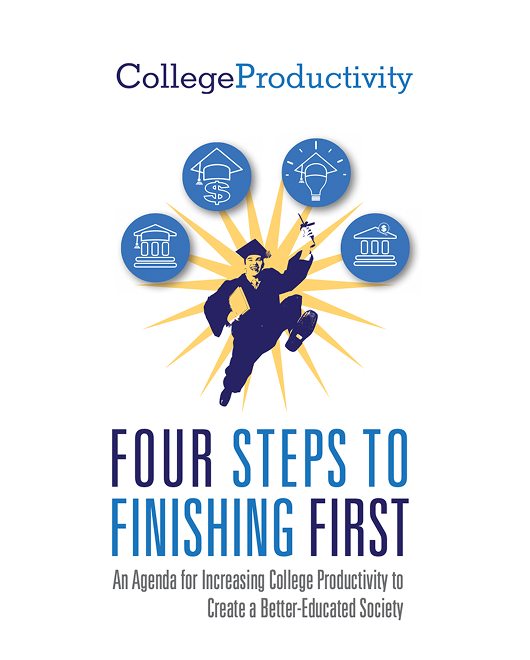
The "Four Steps to Finishing First: An Agenda for Increasing College Productivity to Create a Better-Educated Society" outlines Lumina Foundation's strategy to increase the percentage of working-age Americans with high-quality degrees and credentials by enhancing productivity in higher education. This agenda, compatible with increasing higher education quality, proposes four key policy areas: Performance Funding, which advocates for financial incentives to colleges based on graduating more students with quality degrees; Student Incentives, recommending the strategic use of tuition and financial aid to motivate course and program completion; New Models, promoting lower-cost, high-quality alternatives to traditional academic delivery to increase student capacity; and Business Efficiencies, suggesting business practices that generate savings to support more graduates. Lumina and its partners believe that implementing these research-informed steps can help states build a 21st-century higher education system that serves a diverse student population, including adults and first-generation college students, without relying on significant new investments.
Mobilizing for Policy/Practice Change
Lorem ipsum dolor sit amet, consectetur adipiscing elit. Vestibulum elementum gravida dapibus. Duis viverra sagittis purus, vel faucibus eros iaculis placerat. Fusce mollis ullamcorper sem, sed gravida lectus hendrerit eget.
Shaping State Policy
Lorem ipsum dolor sit amet, consectetur adipiscing elit. Vestibulum elementum gravida dapibus. Duis viverra sagittis purus, vel faucibus eros iaculis placerat. Nam tincidunt nisl nec ex commodo volutpat. Vestibulum egestas vehicula cursus. Cras sed convallis tortor. Quisque posuere ex in blandit porta. Nullam placerat volutpat convallis. In maximus efficitur nunc, ut mattis nibh ornare laoreet. Cras volutpat massa a neque tincidunt faucibus. Quisque id nunc euismod, hendrerit tellus nec, rhoncus nunc. Fusce mollis ullamcorper sem, sed gravida lectus hendrerit eget.
Shaping Institutional Policy and Practice
Lorem ipsum dolor sit amet, consectetur adipiscing elit. Vestibulum elementum gravida dapibus. Duis viverra sagittis purus, vel faucibus eros iaculis placerat. Nam tincidunt nisl nec ex commodo volutpat. Vestibulum egestas vehicula cursus. Cras sed convallis tortor. Quisque posuere ex in blandit porta. Nullam placerat volutpat convallis. In maximus efficitur nunc, ut mattis nibh ornare laoreet. Cras volutpat massa a neque tincidunt faucibus. Quisque id nunc euismod, hendrerit tellus nec, rhoncus nunc. Fusce mollis ullamcorper sem, sed gravida lectus hendrerit eget.
Shaping Community Policy and Practice
Lorem ipsum dolor sit amet, consectetur adipiscing elit. Vestibulum elementum gravida dapibus. Duis viverra sagittis purus, vel faucibus eros iaculis placerat. Nam tincidunt nisl nec ex commodo volutpat. Vestibulum egestas vehicula cursus. Cras sed convallis tortor. Quisque posuere ex in blandit porta. Nullam placerat volutpat convallis. In maximus efficitur nunc, ut mattis nibh ornare laoreet. Cras volutpat massa a neque tincidunt faucibus. Quisque id nunc euismod, hendrerit tellus nec, rhoncus nunc. Fusce mollis ullamcorper sem, sed gravida lectus hendrerit eget.